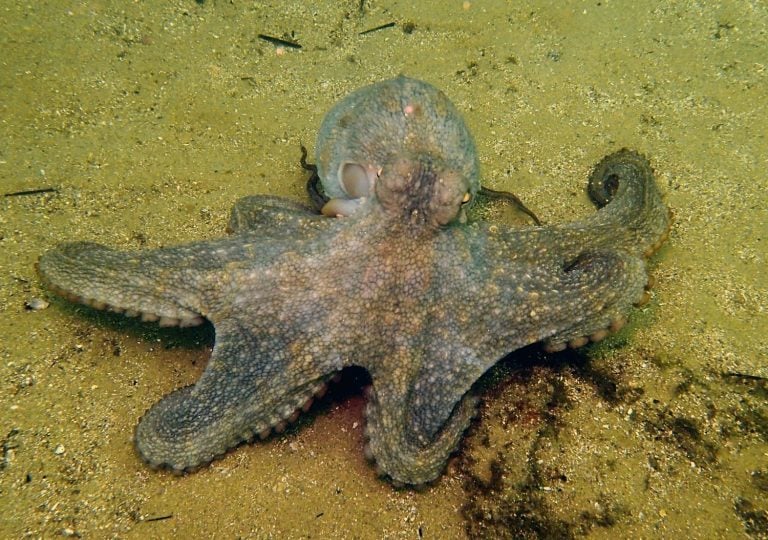

As a mom, I’ve wished I had more hands on multiple occasions. Imagine how much more we could accomplish if we could make lunches, brush our kids’ teeth, fill up water bottles, and do the dishes at the same time?! We weren’t blessed with eight hands, but octopuses were! These fabulous sea creatures aren’t just pretty to look at — a new study found they are incredibly good multi-taskers too. (Is it weird to be jealous of an animal?)
A Fascinating Study

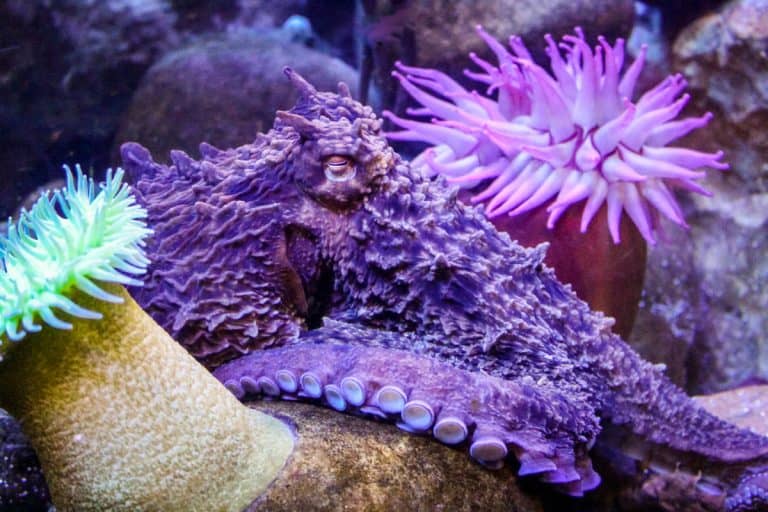
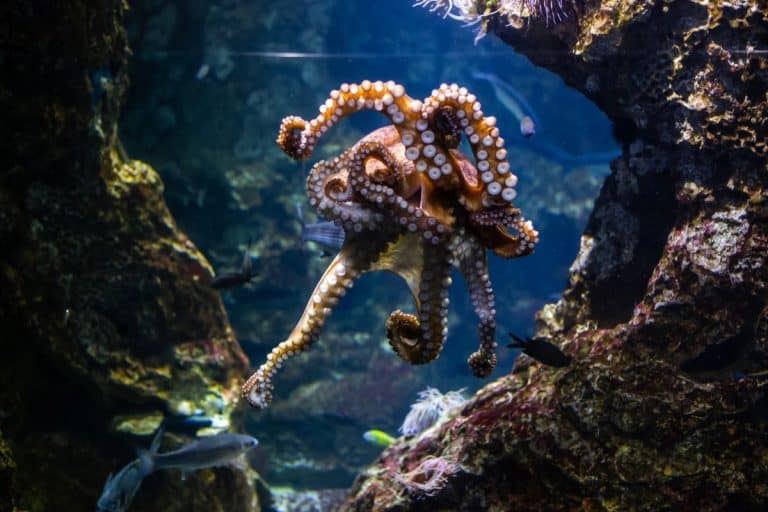
Octopuses can multi-task like pros!
©Amirkhans world/Shutterstock.com
A September 2025 study published in Scientific Reports found that octopuses’ arms are extremely flexible and coordinated during many different arm functions. They can use any of their eight arms to reach, grasp, tiptoe, and perform other tasks, with no difference between the arms on their left and right sides.
“These animals are incredible multitaskers, so they’re able to perform multiple actions on one arm and on multiple arms at the same time,” Kendra Buresch, a research biologist at the Marine Biological Laboratory and an author of the study, told NBC News. “Some other animals have different specializations for different parts of their body, whereas the octopus is really adapted to being able to use any of their arms in basically any situation.”
How amazing is that? I’ve held things with my chin when my arms were full, closed doors with my feet, and cleaned the house with a baby strapped to my chest — and I only have two arms! Just thinking about having that many arms that are all equally useful and can move and function at the same time is hard to wrap my brain around. The animal kingdom truly is incredible!
Arms Packed with Neurons
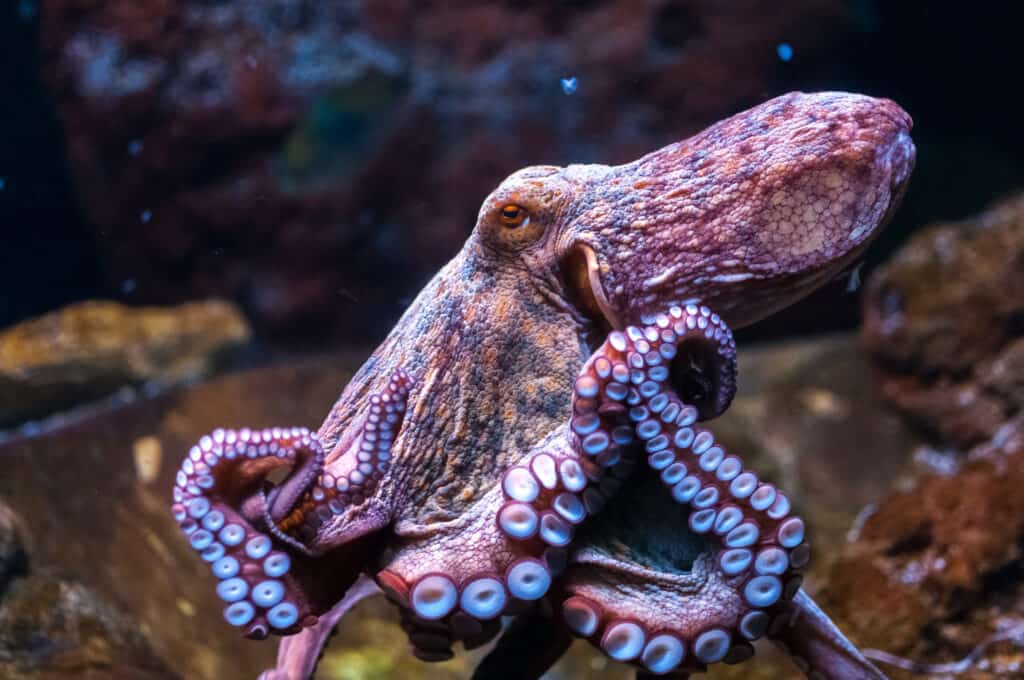
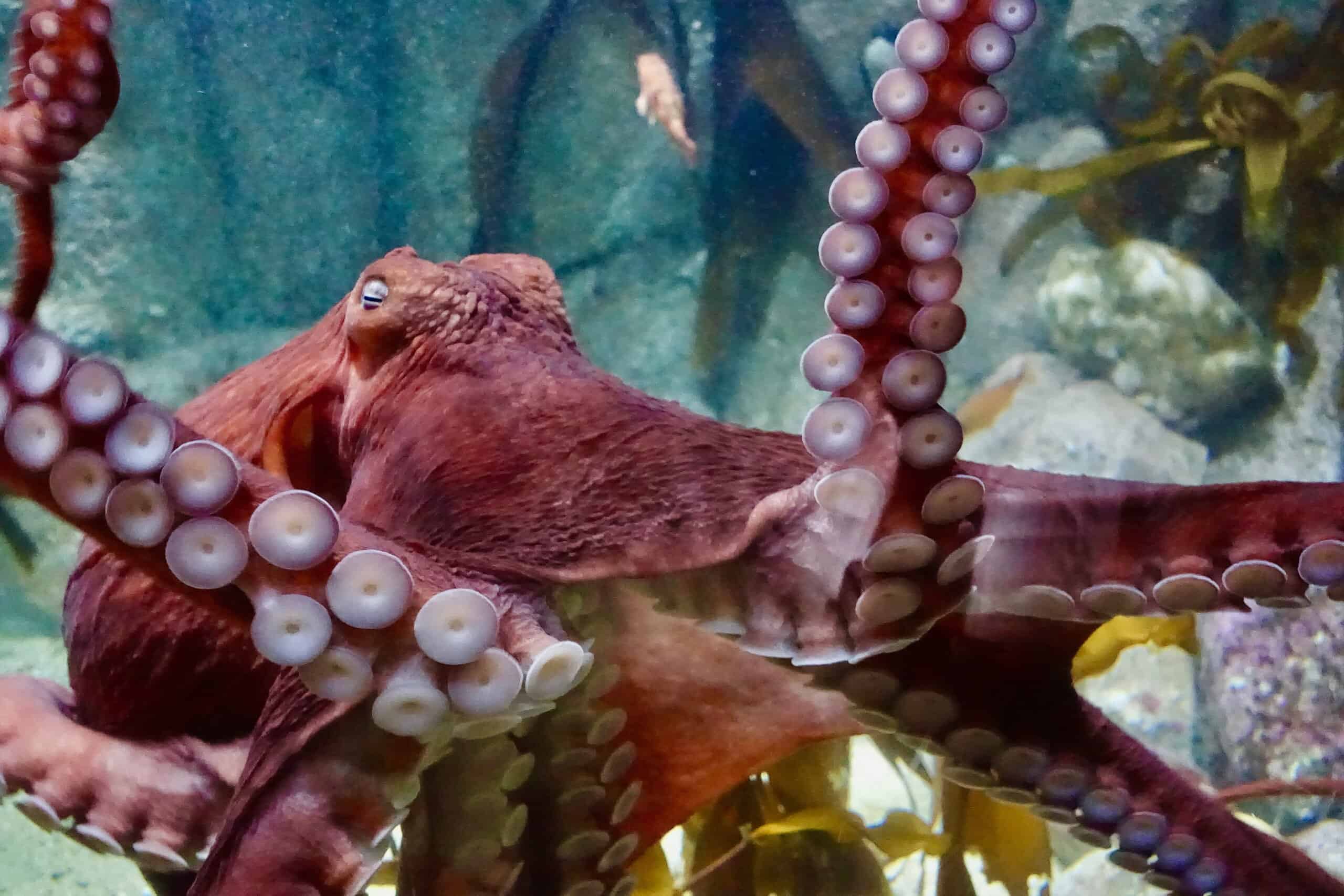
Octopuses taste through the suckers on their airms.
©Olga Visavi/Shutterstock.com
According to the research, octopuses have nerves that run down each of their eight arms that allow them to perform complex movements. They also have suckers and chemoreceptors on their arms that allow them to taste by touch, giving them even more incentive to move their arms and feel around their environment. They also have more neurons in their arms than in their central brain, which contributes to this incredible movement.
According to Buresch, “If I’m an octopus, I’m using my arms to run over surfaces, stick them in holes in the seafloor, looking in crevices in coral heads or rocky ledges and feeling around in there, but mostly tasting around in there to see what’s happening.”
Octopuses’ arms can bend, shorten, and elongate, allowing them to squeeze through gaps and perform a wide range of movements.
A Dozen Arm Actions
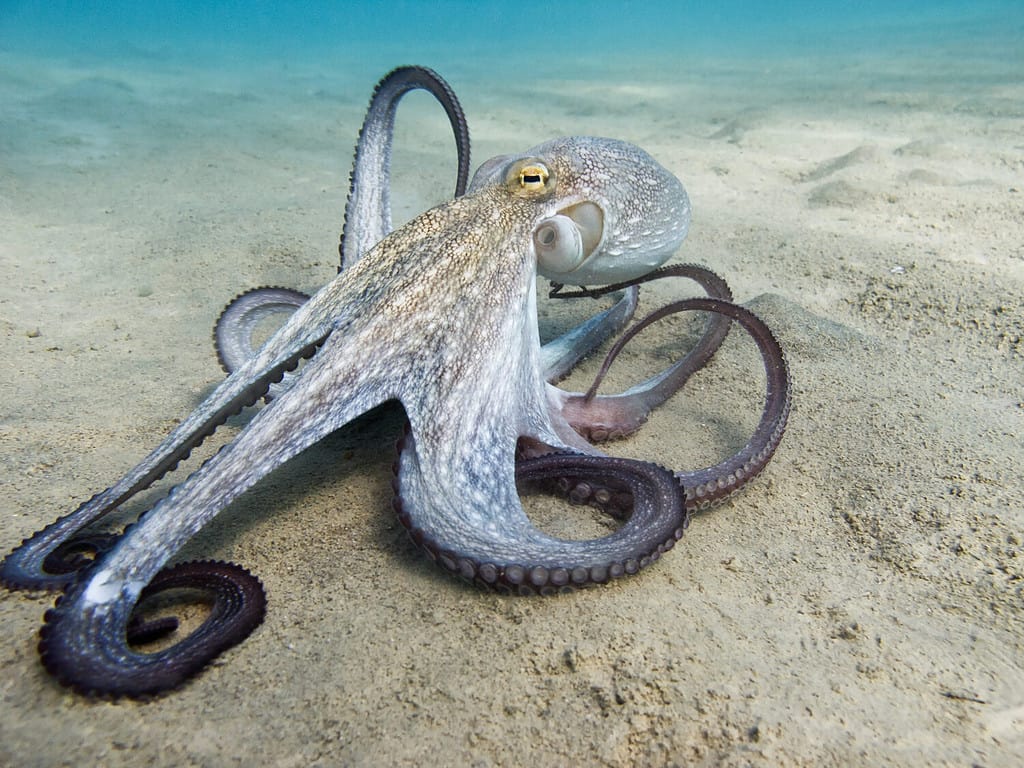
An octopus tends to use different arms for different behaviors.
©ennar0/Shutterstock.com
The researchers recorded 3,907 actions from 25 wild octopuses across six areas, which they narrowed down to 12 arm actions: reach, raise, lower, tuck, push, trail, curl, roll, tiptoe, grasp, stilt, parachute. These actions helped them complete different behaviors, such as crawling, moving seaweed, parachute attack, backward swimming, fetching, and more. During these movements, the researchers found that for a single behavior, multiple arm actions could occur simultaneously on the same arm and/or on adjacent arms.
Just How Flexible Are They?
The research found that each of an octopus’s arms could perform a full range of motion. These include 12 distinct arm actions and 15 behaviors, some of which require as many as 8 to 11 arm actions to complete. Octopuses can also use a single arm to perform multiple actions simultaneously, and they can complete different actions across multiple arms at the same time. They tend to favor their front arms to explore and their back arms for movement. According to the study, octopuses tend to favor their front (anterior) arms for exploration and food handling, using them about 64% of the time, while their back (posterior) arms are used for locomotion about 36% of the time.
Other Animals with Outstanding Abilities
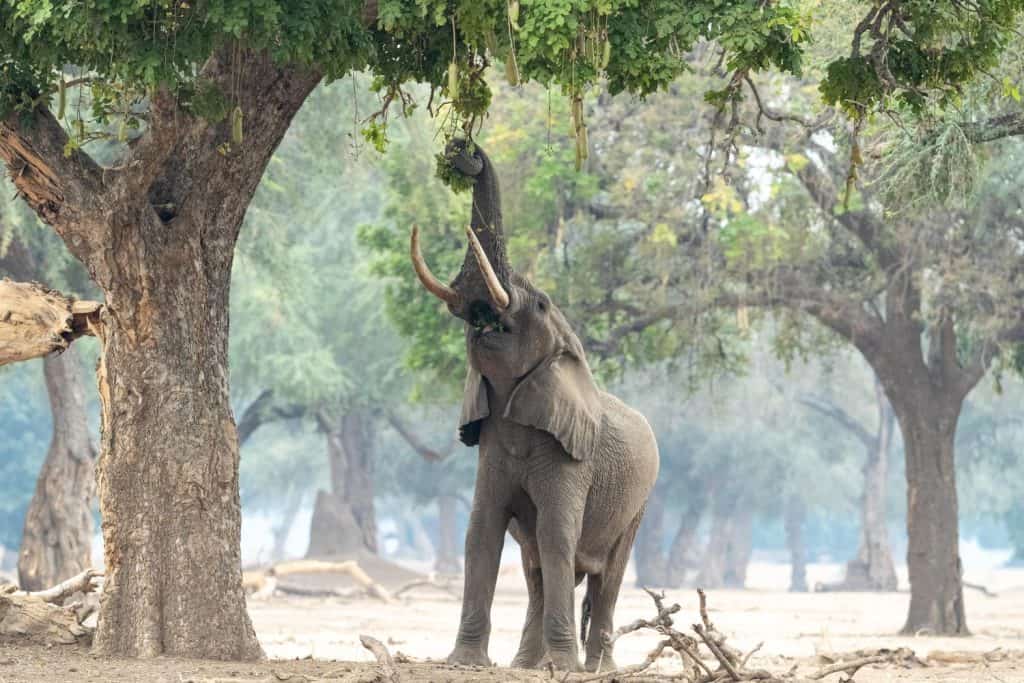
Other flexible animals include elephants, with their long, versatile trunks.
©LMIMAGES/Shutterstock.com
Octopus arms are among the most flexible appendages in the animal kingdom, though other animals also have flexible body parts. For example, seals have rib bones that can bend under pressure when underwater, preventing them from breaking. Similarly, elephants have trunks that are flexible enough to help them communicate, eat, and drink. However, the octopus is the only known animal with eight arms that are this flexible and capable of multitasking in this way. As if we needed another reason to love them! According to the study, research into octopus flexibility could one day inform the design of soft robots, advancing engineering in medical fields. That’s how powerful nature’s design is!